What are probiotics?
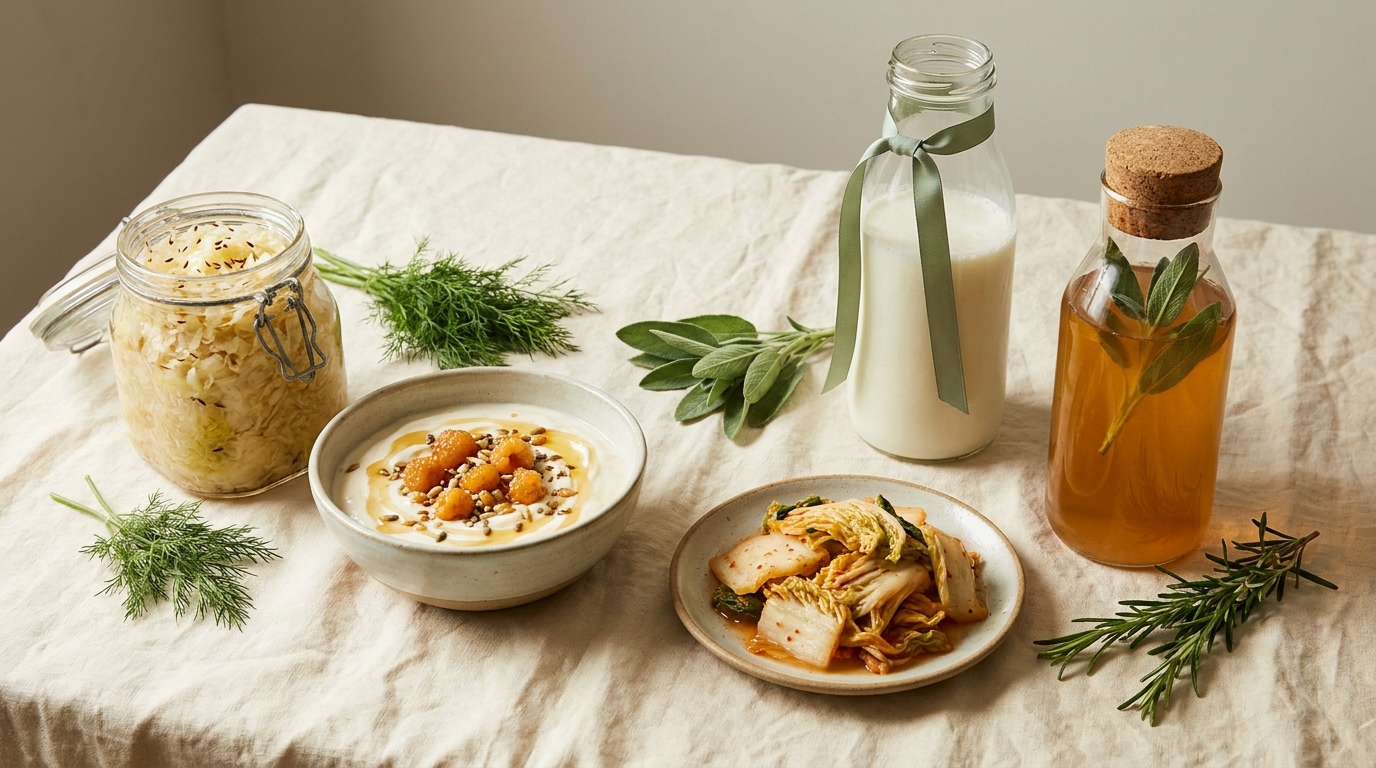
Probiotics are microorganisms (e.g. bacteria, yeasts) which confer health benefit to their host (e.g. humans). There are a range of potential health benefits which depend on the specific strain of bacteria or yeast. You can buy probiotics to take as a supplement. However, many foods contain probiotics too, including yoghurt, kefir, sauerkraut, kimchi, kombucha and tempeh. These fermented probiotic foods have become more popular as people have become more aware of how gut health can influence immune function, mental well-being and general good health. Plus, they are delicious!
What are prebiotics?
Prebiotics are the fuel for probiotics, what those microorganisms prefer to feed on. There are plenty of foods which contain prebiotics. They're found in plant foods such as vegetables, fruits, legumes and wholegrains. Including these foods daily in your diet is essential to support a good gut microbiome.
Can my diet & gut health really affect my mood?
Yes! There has been much research in recent years proving a connection between diet and mental health. This connection is thought to be because of what is known as the mind-gut connection, or the brain-gut axis. This basically means that what is going on in our gut can impact what goes on in our brain! Adherence to the Mediterranean Diet has been shown to improve mental health, most likely because this diet is predominantly plant-based and thus rich in prebiotics, nurturing a healthy gut microbiome.
Quick tips to support gut health
- Include plenty of whole foods and minimally processed foods
- Aim for 5+ serves of vegetables and 2+ serves of fruit daily
- Include legumes 3+ times per week
- Replace refined grains with whole grains
- Include probiotic-rich foods in your diet often
- Limit foods high in sugars and saturated fats, processed and packaged foods, and takeaway
“Curious what a gut-friendly week could look like for you? Let's build it together.”
Book an appointment